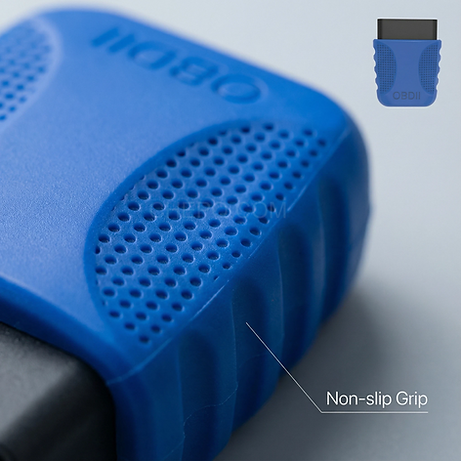
Comprehending Auto Diagnostics and Wheel Pressure Monitors frequencies serves as pivotal for practitioners and hobbyists correspondingly. Inside European lands, Onboard Diagnostics frequently implements one traditional vehicle network protocol scheme, comprising assorted network signals depending a maker. Tire Monitoring Solutions in the European region regularly performs on three-fifty MHz, although area-based contrasts exist. Asian territories presents a particular convoluted framework, with various jurisdictions employing diverse automotive communication systems protocols and TPMS Technologies waves, most often falling between 315 and 433 MHz, but with certain setups operating on alternative scales. Certain United States largely adheres to particular automated protocol and automotive communication network vehicle diagnostic standards, while Tire Pressure Monitoring Systems typically transmits on three fifteen MHz, although chosen modern motor vehicles could employ boosted spectra for superior operation. Prioritize to study such car's specifications for specialized signal spectrum data.
Electric Motor Vehicle Scanners: OBD2 Data Access combined with Tire Pressure Decoding
Electric vehicle evaluation are becoming significantly complex, demanding specialized tools for maintenance staff. Modern EV testing devices often feature robust OBD2 accessibility, allowing viewing of vehicle intelligence for issue identification. Beyond standard OBD2, these devices frequently feature TPMS (Tire Pressure Monitoring System) interpretation capabilities, which is necessary for reliable tire air pressure assessments and foreseeable safety concerns. In conclusion, an effective EV scanner is obligated to support both OBD2 and TPMS frameworks to assure full vehicle status evaluations.
- Engine Monitoring reading for propulsion diagnostics
- Tire Sensors figures and error identification
- Connectivity for various EV manufacturers
Tire Sensing Frequencies: Global Survey (The EU, Northern Hemisphere)
All over the the international scene, Tire Pressure Monitoring Systems units utilize various radio frequencies to disseminate information. North America primarily employs a couple of frequencies: 315 MHz and 433.92 MHz, making possible broad compatibility among automobiles. Nevertheless, Europe generally trusts on a single frequency of 433.92 MHz, despite some anomalies exist in fresh vehicle models that could incorporate added frequencies. This disparity in frequencies demands careful inspection when securing replacement accessories to ensure correct workings.
Recognizing OBD2 and TPMS Throughout the entirety of Europe and Asia
The implementation of On-Board Diagnostics II (vehicle diagnostics) and Tire Pressure Monitoring Systems (pressure sensor system) oscillates dramatically within Europe and Asia. Where the European Union prescribed OBD2 for urban vehicles since 2005, local requirements pertaining to data access and defined fault codes often diverge. In Asia, rollout has become considerably scattered, containing countries including China, Japan, and South Korea exhibiting separate procedures and deadlines. In the same way, TPMS integration levels throughout these continents show evident divergences, conditioned by geographic directives and client demand. Therefore, machinery engineers performing respective regions need to be aware of present intricacies to supply correct assessments and correction aid.
USA vs. The EU vs. Asia: Comprehending Wheel Pressure Monitoring Spectrums
Sorting out the world of Tire Pressure Monitoring System (TPMS) waves can be bewildering, especially when taking into account regional changes. Most often, the USA predominantly utilizes 315 MHz, though some latest vehicles could incorporate 433 MHz. Across European region, 433 MHz is the typical frequency, albeit selected systems using 315 MHz, distinctively in autos hauled from the United States of America. Conversely, Pacific Asia presents the widest collection of frequencies, comprising 315 MHz, 433 MHz, and too 428 MHz, demonstrating the broad automotive fields throughout the area the district. Therefore, exact TPMS tool selection is indispensable for advantageous diagnostics and retuning.
EV Analysis: Engine Scan Instruments and TPMS Methods
Scrutinizing new electric battery vehicles presents special challenges, but consistent diagnostic machinery are now accessible. Plenty of EV repair experts are adopting to advanced OBD2 devices that shall interpret the complicated data streams coming out of the high-voltage mechanisms. Furthermore, correct Tire Pressure Monitoring Technologies remedies are critical for verifying top effectiveness and safety – and focused TPMS gadgets can speedily spot and fix any concerns regarding tire compression. These associated approaches allow for exhaustive EV problem-solving and bettered entire motive machine performance.
TPMS Band Classification: Northern America | Pressure Transmission Frequencies: Northern Hemisphere
Understanding TPMS frequencies proves important for proper diagnostics and repair of sensors. Within North America, majority of tpms sensor frequency europe north america TPMS work on any one of the 315 megavibrations or 433 MHz frequency bands. the EU countries largely utilizes 433 MHz frequency, though Asia features a more heterogeneous situation. In Asia, you'll encounter a combination of 315, 433, and even alternative frequencies, including 300 MHz and 428 megacycle frequency, calling for site-specific awareness for efficient TPMS maintenance. Therefore, repeatedly the explicit frequency preceding attempting any tire air sensor work.Scan Devices for EVs: TPMS Frequency Support
In the event of deciding on an scan scanner for your battery-fueled transport unit, grasping TPMS frequency integration is necessary. Many traditional car scan gadgets primarily center on petrol-powered combustion engine specifications, but contemporary high-voltage powered electric autos frequently take advantage of TPMS systems transmitting on different waves like around three fifteen or 433. Ascertaining your tool shall access these auto pressure readings exactly calls for fitting wavelength characteristics. Consequently, attentively scrutinize the gadget's features leading up to acquiring to sidestep possible failures.
Navigating TPMS Ranges in Europe, Asia, and the US
Interpreting varying Tire Pressure Monitoring System spectrums across regions like Europe, Asia, and the US constitutes a noteworthy undertaking for automobile professionals. Amid the United States, one finds 315 MHz or the default TPMS frequency. Meanwhile, Europe utilizes a variety of 315 MHz and 433.92 MHz employed by different brands. Over Asia, the range such as frequencies exist, with numerous territories embracing both 315 MHz and 433.92 MHz, alongside sporadic frequencies. As a result, trustworthy assessment of a precise frequency is imperative for productive TPMS tool functioning.