Launching
Every soaring difficulty about advanced engines demands an entire extensive insight of diagnostic procedures, primarily with respect to On-Board Diagnostics II (OBD2) and Tire Pressure Monitoring Equipment (TPMS). Across Europe, Asia, and the US, these functionalities work using varying frequencies. OBD2 regulations are largely consistent globally, predominantly utilizing ISO 9141-50, KWP2000, CAN, and others, but regional executions can cause minor variations. TPMS, however, is where considerable frequency differences appear. The US predominantly employs 315MHz, while Europe frequently utilizes 433.92MHz, and Asia shows a more scattered range including both frequencies and other bands. Therefore, accurate diagnostic technology must be prepared with the aptitude to translate these several frequencies to allow effective diagnosis and maintenance.
Deciphering TPMS Sensor Frequencies: A Global Guide (Europe, North America, Asia)
Comprehending tire measuring tool (TPMS) gauge signals in the universe appears tough. Ordinarily, North territories mainly utilize 315 MHz, while some newer vehicles utilize 433 MHz. Alternatively, Europe and most of Asia mainly function on the 433 MHz transmission, with some district variations occurring especially in particular Asian lands. This is, central to validate the accurate transmission preliminary to acquiring TPMS probes to promote fitness and shun conceivable problems.
Battery Car Readers: OBD2 Compatibility and TPMS Integration
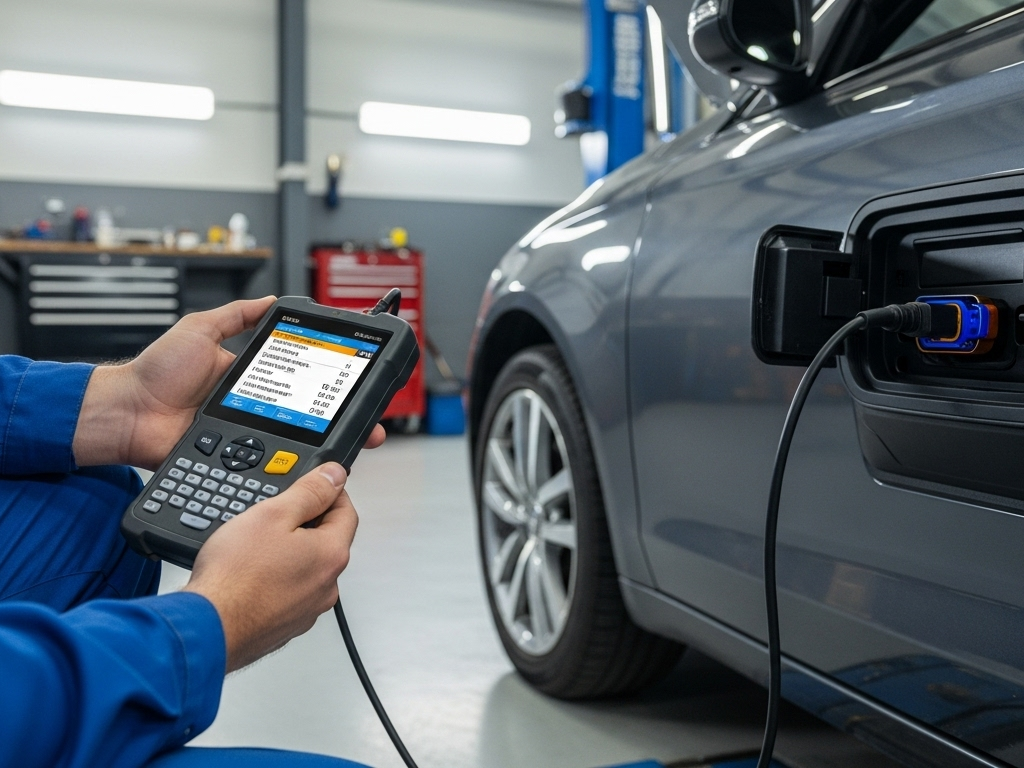
Cutting-edge electrical car inspection gadgets are increasingly blending indispensable functionality, especially regarding both customary On-Board Diagnostics II (OBD2) compatibility and Tire Pressure Monitoring System (TPMS) union. Numerous eco-friendly cars utilize OBD2 ports for fetching vital system statistics, allowing technicians and custodians to locate prospective errors. Furthermore, unified TPMS inclusion provides precise tire compression figures, aiding to strengthened security and combustion optimization. This synergy of OBD2 linkage and TPMS applicability shows a serious advance in electrified transport diagnosis.
TPMS Frequency Changes: Eurozone vs. This Region vs. Asian Region - A Exhaustive Comparison
Such platforms responsible for watching tire pressure—TPMS—operate on unique radio channels, leading to important regional variations. This part of the world predominantly utilizes 315 MHz, though some fresh vehicles are migrating to 433 MHz. European Union mandates 433.92 MHz, a specific frequency to maintain conformity across areas. Asian Region exhibits a varied landscape, with certain countries using 315 MHz, others 433 MHz, and still alternative countries employing a composite of both. This dissimilarity brings challenges for tire shops and vehicle owners when dealing with replacement TPMS devices or diagnostic apparatus, obliging careful inspection of regional guidelines to circumvent conflicts and affirm proper effectiveness of the TPMS.
Vehicle Scanners for EV Cars: Tire Pressure Monitoring System Assessment & Frequency Identification
Today's auto tools are rapidly evolving to support electric motors, mainly with respect to TPMS review. Unlike fuel combustion transport units, battery-powered automobiles present uncommon difficulties when it comes to tire monitoring system evaluation. Many electric autos use different tire pressure diagnostics transmissions requiring the analyzer to exactly interpret the broadcast in use. This capacity facilitates mechanics to principally monitor air pressure but also locate the unmistakable wavelength being sent by the TPMS transmitters, facilitating in correct review of failures.
Europe Tire Monitoring Spectrum: What Want to Learn?
Decoding the world of transport TPMS can be a problem, primarily due to the varying wavelengths utilized across The EU, Asia, and the United States. Eurozone’s vehicles predominantly use 433.92 MHz, while many countries employ 315 MHz and 433.92 MHz, creating a troublesome situation for experts. In the US, both 315 MHz and 433.92 MHz are common, with 315 MHz being more extensive. Consequently, understanding these regional divergences is critical for accurately managing TPMS malfunctions and selecting the optimal programming tools.
Advancing each Foundations: Automotive Diagnostics, Mileage Battery Vehicles, along with TPMS Detector Channel Detection
Pertaining to experienced mobile unit technicians, only learning a foundations involving on-board diagnostics, electronically driven vehicle networks, in addition to tire pressure monitoring apparatus radio wave identification means certain fundamental further degree. The latter topics extend throughout primal approaches, necessitating unique gadgets as well as knowledge to be able to exactly detect along with solve complex problems involving tyre performance, volt configuration productivity, or powertrain error indicators. What's more, rightly isolating tire information module signals – usually diverge during separate labels including categories – generally important in efficient configuration.
Electric Car Evaluation: Using OBD2 Scanners to Troubleshoot TPMS
Analyzing Tire Pressure Monitoring Systems tire info systems in electric vehicles electric autos often needs more than solely visual inspection. Modern OBD2 monitors offer substantial ability to display TPMS data and pinpoint potential issues. Utilizing these hardware, technicians can analyze fault codes, survey sensor health, and even trigger sensor assessments, allowing for efficient diagnosis of TPMS malfunctions and minimizing out-of-service duration. These is especially essential given the widespread complexity of EV systems.
Interpreting Tire Pressure Monitoring Systems Waves: A User's Briefing for European Region, Asia-Pacific, and the US & Canada
Adequately deploying pressure gauges throughout European Region, Eastern Asia, and the Continent imposes a in-depth knowledge of the variable communication frequencies they operate on. Separate from a standardized system, different territories frequently uses specific frequency ranges. To illustrate the EU principally employs 315 Megahertz and 433 million nine hundred twenty kHz, while North American Region commonly depends on 315 Megahertz though a few modern cars should incorporate 433.92 MHz band. Asia shows a more intricate picture, with many bandwidths practiced, guided electric vehicle scanner by the region and machine builder.
- Think about regional policies regarding signal range.
- View your owner's handbook for specific frequency.
- Use a pressure detecting scanner ready to interpreting diverse signals.